











The Ultimate Guide: Ceiling Fans with Lights Flush Mount
Ever feel like you have to choose between a cool breeze and enough headroom? If you’ve got ceilings under 8 feet, a standard ceiling fan can feel like a low-hanging obstacle course. That’s where a ceiling fan with lights flush mount comes in. These are the unsung heroes for rooms that are a little short on vertical space, and we're here to have some fun exploring the best of the best.
What Are Flush Mount Ceiling Fans and Why You Need One

Think of a regular ceiling fan like a pendant light—it hangs down on a rod, which is great for high ceilings but a real problem in standard-height rooms. A flush mount fan, on the other hand, is built to "hug" the ceiling. There's no downrod. The base of the fan mounts directly onto the ceiling, keeping the entire fixture as high and out of the way as possible.
It's a brilliant two-for-one solution. You get that much-needed airflow without anyone having to duck, plus an integrated light that brightens up the room. It’s a clean, simple look that solves a very common problem, especially in modern homes.
The Ultimate Space-Saving Solution
Safety is a big deal with ceiling fans. The National Electrical Code (NEC) recommends keeping fan blades at least seven feet off the floor. In a room with an 8-foot ceiling, a standard fan on a downrod can easily drop below that safe height.
A flush mount fan is designed specifically for this scenario. By mounting flat against the ceiling, it maximizes your headroom and keeps the blades safely above everyone's heads.
This makes ceiling fans with lights flush mount the perfect fit for so many spots in your home:
- Bedrooms: Get a comfortable breeze for a good night's sleep, even in rooms with standard 8-foot ceilings.
- Kitchens: Keep cool while you're cooking without a fan hanging down in your workspace.
- Finished Basements: Add light and airflow to entertainment rooms that naturally have lower ceilings.
- Hallways and Home Offices: Bring comfort to smaller spaces where a traditional fan would just feel too big and intrusive.
Turning a Problem into a Stylish Focal Point
Let’s be clear: choosing a practical fan doesn't mean you have to sacrifice style. The days of boring, functional-only hugger fans are long gone. Today's flush mount designs are genuine showpieces. Instead of viewing a low ceiling as a design flaw, think of it as the perfect canvas for a stunning fan that completes the room.
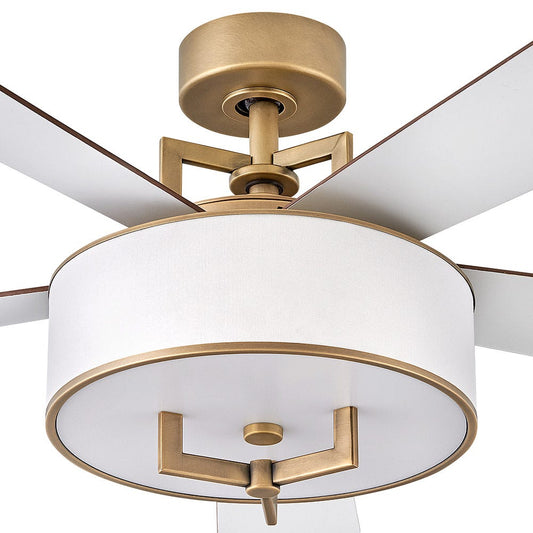
Just look at a high-end model like the gorgeous Artemis IV ($690). It perfectly blends fluid, modern lines with top-tier performance. A fan like that doesn’t just solve a problem; it becomes a focal point that elevates the entire space.
Whether your style is modern farmhouse, industrial, or minimalist, there’s a flush mount fan out there that will turn your low-ceiling challenge into a design win. To get a better handle on the terminology, you can learn more about what flush mount means in our guide. It's a simple idea with a huge impact.
The Pros and Cons of Hugger Ceiling Fans
 Let's get real about what makes flush mount fans great—and where they have their trade-offs. Just like any decision you make for your home, from paint colors to flooring, there are two sides to the coin. A balanced view will help you figure out if a ceiling fans with lights flush mount model is the right call for your space.
It’s no surprise these fans are so popular. The global ceiling fan market, which includes these hugger styles, hit an incredible $11.83 billion in 2025 and is expected to climb to $17.98 billion by 2034. That growth is all about homeowners wanting fixtures that deliver both airflow and light in one neat package, especially as modern homes get smarter about maximizing every inch of space. You can see the full breakdown in the Fortune Business Insights market report.
The Clear Advantages of Flush Mount Fans
The biggest win here is their space-saving genius. Hugger fans are specifically built to give you back precious headroom, making them a non-negotiable for rooms with ceilings under 8 feet. This isn't just about avoiding bonking your head; it’s about making the entire room feel more open and less cramped.
Beyond just safety, flush mount fans offer some other great perks:
- A Sleek, Modern Look: Their low-profile design creates a clean, uncluttered look on your ceiling. It’s a minimalist aesthetic that fits right in with contemporary, modern, and transitional homes where simplicity is key.
- Two-in-One Functionality: A ceiling fan with a built-in light combines air circulation and ambient lighting into a single fixture. That means one installation, one thing on the ceiling, and less fuss all around.
- Enhanced Safety in Low-Ceiling Areas: With blades tucked up close to the ceiling, they are hands-down the safest option for kids' rooms, playrooms, or any spot where people might be jumping around or raising their arms.
Understanding the Trade-Offs
Now for the other side of the story. The "cons" of a hugger fan are really just a matter of physics. Because the blades are so close to the ceiling, they have less open air to pull from above, which can sometimes mean a little less airflow compared to a traditional fan on a downrod.
Think of it like a rower’s oar: a deep, powerful stroke that goes way down in the water is going to move a lot more water than a shallow paddle near the surface. A downrod lets a fan's blades take that "deeper stroke" into the room's air.
This doesn't mean you're doomed to a weak breeze, though. That idea is mostly based on older, weaker models, and modern engineering has come a long way. If you want to dive deeper into the nuts and bolts, you can check out our detailed article on hugger ceiling fans.
How Premium Models Overcome Airflow Limits
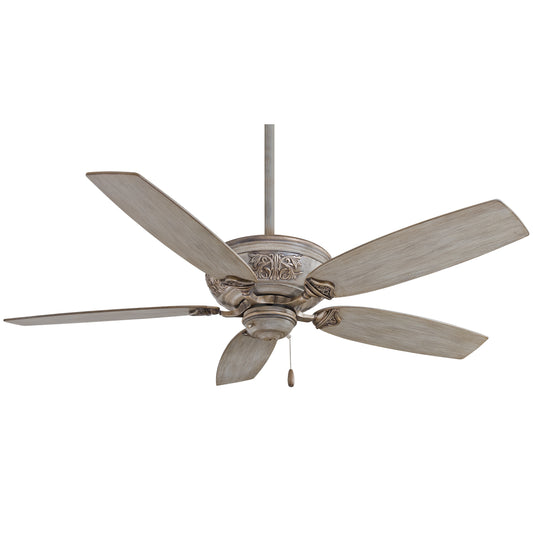
This is where investing in a quality fan really pays off. While a basic, off-the-shelf fan might struggle, a premium model like the exquisite Chateaux ($1,050) is a masterclass in airflow engineering. It's designed specifically to tackle the hugger fan's natural challenge.
These high-performance fans use a smart combination of features to get the air moving:
- Powerful, High-Efficiency Motors: They generate more torque to spin the blades at the perfect speed, moving more air without making a racket.
- Aggressively Pitched Blades: The angle of the blades is carefully optimized to grab and push down as much air as possible with every single rotation.
- Advanced Blade Aerodynamics: Even the shape and contour of the blades are designed to create a powerful downdraft, making that closeness to the ceiling a non-issue.
Ultimately, choosing a ceiling fans with lights flush mount model is about balancing your room's needs with your desire for comfort and style. By going with a well-engineered fan, you get all the space-saving benefits without having to give up on a great breeze.
How to Choose the Perfect Flush Mount Fan for Your Room
Ready to find the right fan for your space? Picking out the perfect ceiling fans with lights flush mount is about balancing looks with performance. You need something that not only complements your room's style but also does its job—moving air—without any fuss. Let's walk through how to make the right choice, step by step.
The first thing to sort out is size. It might seem boring, but getting this right is the foundation for everything else. A fan that’s too small for the room will just spin its blades without making much of a difference. Go too big, and you’ll feel like you’re in a wind tunnel every time you turn it on.
Match the Blade Span to Your Room Size
Think of the blade span as the fan's total wingspan—the measurement from the tip of one blade straight across to the tip of the opposite blade. The larger the room, the wider the span you'll need to get the air moving effectively. For most standard living rooms or master bedrooms, a 52-inch blade span is the go-to size for a comfortable, consistent breeze.
Here’s a quick table to help you match the fan to your room’s square footage. Getting this right is the key to a fan you’ll actually love using.
Recommended Fan Size by Room Dimensions
| Room Size (Square Feet) | Recommended Fan Blade Span (Inches) | Ideal For |
|---|---|---|
| Up to 75 sq. ft. | 29 – 36 inches | Bathrooms, breakfast nooks, hallways |
| 76 to 144 sq. ft. | 36 – 42 inches | Home offices, smaller bedrooms |
| 145 to 225 sq. ft. | 44 – 50 inches | Mid-sized bedrooms, kitchens |
| 226 to 400 sq. ft. | 52 – 60 inches | Living rooms, master suites, great rooms |
| Over 400 sq. ft. | 62+ inches or multiple fans | Large open-concept areas, lofts |
This table is a great starting point. If you want to dig a little deeper into the details, check out our guide on how to choose a ceiling fan size for your room.
Define Your Room's Aesthetic
Once the technical part is handled, we get to the fun stuff—style. A ceiling fan is a major piece of decor, so you want it to feel right. Are you looking for something that blends in so well you barely notice it's there, or do you want a fixture that pulls the eye upward and makes a statement?
Just take a look at the furniture and finishes you already have.
- For Minimalist and Modern Spaces: Go for clean, simple designs. Our 3 Blade Collection is full of fans with sharp lines that fit perfectly with a contemporary vibe. They do their job without adding clutter.
- For Traditional or Farmhouse Charm: Fans with five or more blades, often in classic wood tones and with a little more detail, add a warm, timeless feel to a room.
- For a Unique, Relaxed Vibe: If you want your space to feel like a vacation, our Tropical Collection is the way to go. These fans use natural materials and leaf-shaped blades to give any sunroom or bedroom an instant resort-like feel.
The goal is to choose a fan that feels like a natural extension of your home's personality. Whether it’s rustic, industrial, or coastal, the right fan will tie the whole room together.
Illuminate Your Lighting Options
Don't forget the "with lights" part of ceiling fans with lights flush mount—it’s just as important as the fan itself. We’ve come a long way from the days of a single, harsh bulb. Today's fans offer all kinds of lighting options to set the perfect mood.
The two main things to think about here are brightness (lumens) and light color (kelvins).
- Brightness (Lumens): For a workhorse space like a kitchen or home office, you’ll want a fan with a high lumen output for clear task lighting. In a bedroom, a softer, dimmer glow is usually more relaxing.
- Dimmable LEDs: Honestly, this is a non-negotiable feature for most people now. Dimmable lights give you the flexibility to go from bright and functional to low and cozy with a single click.
- Color Temperature: Warm white (around 2700K-3000K) gives off a cozy, inviting light that’s perfect for living rooms and bedrooms. Cool white (4000K-5000K) is brighter and more energizing, which works great in kitchens and bathrooms.
If you’re integrating your fan into a larger smart home setup, it's a good idea to see how its features line up with the best smart lighting systems to ensure everything works together smoothly.
A high-quality model like our Breeze fan ($580) is a perfect example of a fan that gets it all right. It packs a powerful, whisper-quiet motor and a beautifully integrated, dimmable LED light into one sleek package. Investing in a fan like this is about more than just moving air; it's about upgrading the whole feel of the room with a design and performance that truly stand out.
Putting a Spin on Efficiency and Smart Tech
Today’s ceiling fans with lights flush mount are a far cry from the wobbly, noisy fixtures you might remember. They’re now sleek, high-tech appliances built for performance, and a lot of that comes down to the motor running the show.
The real game-changer here is the DC (direct current) motor. For decades, the industry standard was the AC (alternating current) motor, but DC technology has completely changed our expectations. These modern motors use powerful magnets and advanced electronics to do their job, which lets them sip energy instead of guzzling it—we’re talking about using up to 70% less energy than their older AC cousins.
That’s not just a number on a spec sheet. For you, it means real, noticeable savings on your electricity bill month after month. It's one of those rare home upgrades that actually starts paying for itself from day one.
The Power of Silence
Beyond the energy savings, what most people really fall in love with is how unbelievably quiet a DC motor is. Old-school AC motors often came with a constant, low-grade hum. You might tune it out during the day, but in the dead of night, that sound can be surprisingly disruptive.
DC motors, by contrast, are practically silent. This makes them the clear winner for bedrooms, nurseries, or any space where you need a little peace and quiet.
Take a premium model like our Aviation fan ($700). It’s designed to pair powerful, cooling airflow with a motor so quiet you’ll forget it’s even on. That whisper-quiet operation isn't just a feature; it's a quality-of-life improvement you'll appreciate every single day.
This focus on efficiency isn't just a niche trend—it's reshaping the entire industry. Experts project the global market for these advanced fans will hit $15.6 billion by 2031, largely because people are finally catching on to how much energy they save. When you realize a DC motor can use 65% more energy than an AC model, it's easy to see why they've become a go-to for home renovations.
This simple guide helps break down the selection process, walking you through how to balance your room's size with your personal style and lighting preferences. It’s all about finding that perfect intersection of function and form.

Ultimately, the key is remembering that how a fan works in your space is just as important as how it looks.
Smart Fans for a Smarter Home
The other area where modern flush mount fans really pull ahead is the "smart" stuff. Many of our best models now have Wi-Fi built right in, turning them from a simple fixture into a fully integrated part of your smart home.
So, what can you actually do with that?
- Control From Your Phone: Forget hunting for the remote or yanking on a pull chain. You can change the fan's speed, dim the lights, and even reverse the blade direction straight from an app.
- Use Your Voice: Sync the fan with Amazon Alexa or Google Assistant, and you're good to go. "Hey Google, set the fan to medium" is all it takes to get a breeze going.
- Set It and Forget It: Schedule your fan to turn on before you get home from work or to switch off an hour after you've gone to bed. It’s comfort that works around your life, not the other way around.
If you want a surefire way to know you’re getting a top-tier efficient model, look for the ENERGY STAR certification. These fans are independently tested to meet strict efficiency guidelines from the U.S. Environmental Protection Agency. Think of it as a seal of approval that guarantees your fan is good for your wallet and the planet. For a deeper dive on this, feel free to check out our guide on energy-efficient ceiling fans.
A Simple Guide to Installation and Maintenance
Ready to roll up your sleeves and install your new ceiling fans with lights flush mount? It might look like a big job from the box, but it’s a project most confident DIYers can absolutely handle. The key is to take your time and follow the steps carefully.
Before you even think about unboxing the fan, we have to talk about safety. This is the single most important step. You need to check that the electrical box in your ceiling is fan-rated. A standard box made for a simple light fixture just won’t cut it—it’s not built to handle the weight and constant motion of a fan, which can weigh up to 50 pounds. A fan-rated box is your insurance against a dangerous fall.
Once you’ve confirmed you have the proper support overhead, the rest is methodical work. Since you’re installing a model with a light, it pays to understand the basics of how to wire a light fitting safely. This ensures everything runs smoothly right from the start.
Key Installation Milestones
While every fan has its own quirks, the installation process generally follows the same path. First thing’s first: always head to your circuit breaker and turn off the power to the room you’re working in. No exceptions.
- Mount the Bracket: This is the foundation of your entire fan. Secure the mounting bracket directly to that fan-rated electrical box in your ceiling. Make sure every screw is good and tight.
- Assemble the Fan on the Floor: Don’t try to be a hero. It's so much easier to attach the fan blades to the motor housing while you’re comfortably on the ground, not balancing on a ladder.
- Wire It Up: Carefully lift the assembled fan and hang it on the mounting bracket's hook (most have one for this very reason). Now you can connect the wires: match the colors from the ceiling to the fan—black to black (hot), white to white (neutral), and the green or copper wire to the ground.
- Secure and Finish: Lift the fan off the hook and secure it permanently to the bracket. From there, you'll attach the light kit, screw in the bulbs, and add any glass shades or covers.
A great installation isn't about speed; it's about being meticulous. Double-checking that every connection is secure and every screw is tight is what gives you a fan that runs quietly and perfectly for years to come. For a more in-depth guide, check out our full article on how to install a ceiling fan with lights.
Long-Term Fan Maintenance
So, your fan is up and spinning beautifully. Awesome! A few minutes of simple upkeep now and then will keep it in peak condition for the long haul.
Cleaning Without the Mess Dusty blades look messy and can actually throw the fan off balance. Here’s a brilliant, no-mess trick: grab an old pillowcase, slide it over one blade at a time, and pull it back. All that dust gets trapped inside the pillowcase instead of raining down on your furniture.
Preventing the Wobble If your fan starts to wobble, nine times out of ten the culprit is a loose screw. The fan's natural vibration can slowly loosen the screws that hold the blades to their brackets. Give them a quick check and tighten them up every six months or so to keep things running smoothly.
Using the Reverse Switch for Winter Did you know your fan can actually help you feel warmer in the winter? On the motor housing, there’s a small switch that reverses the blade direction.
- Summer: Set the blades to spin counter-clockwise. This pushes cool air straight down, creating a nice breeze.
- Winter: Flip the switch to spin clockwise. This gently pulls cool air up, forcing the warm air that collects near the ceiling down and around the room.
That simple flip of a switch helps your heating system work more efficiently and makes the whole room feel cozier. It’s a little trick that makes a big difference.
Alright, you've absorbed a lot of info on blade spans, motors, and lighting. Now it's time to put it all together. Think of this as your final gut-check before you pick out the perfect ceiling fans with lights flush mount for your home.
This isn’t just about buying a fan; it’s about making a smart upgrade. Run through these points to make sure you’ve covered all your bases and are ready to buy with confidence.
The Essential Pre-Purchase Scan
Before you even start browsing, let’s lock in the fundamentals of your space. Getting these details right from the get-go is the difference between a smooth installation and a frustrating headache.
- Ceiling Height Check: Is your ceiling under 8 feet? If the answer is yes, a flush mount isn't just a good idea—it's the only safe and practical choice.
- Room Size Measurement: Pull out a tape measure and get your room's square footage (just multiply length by width). This number is what’s going to guide your blade span decision.
- Blade Span Selection: Now, match that square footage to the right blade span. For example, a standard 52-inch fan is perfect for a 226-400 sq. ft. living room. This isn't just a suggestion; it’s the key to getting great airflow without wasting energy.
Nailing the Style and Function
With the technical stuff sorted, we can move on to the fun part—defining how your fan will look and act in the room.
This is where your fan stops being an appliance and starts becoming a part of your home's decor. You're looking for a model that feels like it belongs, whether it's the clean, understated look of our 3 Blade Collection or something with a bit more rustic charm.
And don't overlook the features that will shape how you use the fan every single day:
- Lighting Needs: What kind of light do you need? Bright light for cooking and reading, or something soft and ambient for relaxing? Keep an eye out for dimmable LEDs to get the best of both worlds.
- Motor Type: For a bedroom, home office, or any other quiet zone, a DC motor is the way to go. They’re whisper-quiet and incredibly efficient.
- Smart Features: Love the idea of telling your fan what to do or controlling it from your phone? Plenty of modern fans have Wi-Fi integration built right in.
It’s no surprise these fans are so popular. They’re a huge part of the post-pandemic renovation boom, which saw U.S. residential sales jump by 12% from 2021-2023. Flush mounts are especially favored for their space-saving design in crucial spots like kitchens.
The whole U.S. ceiling fan market hit a value of $1.38 billion in 2025 and is still growing. You can dive deeper into these ceiling fan market trends to see just how on-point your choice is.
Frequently Asked Questions About Flush Mount Fans
Even after you've measured your ceilings and picked a style, a few last-minute questions can pop up. It’s completely normal. To make sure you feel 100% confident in your choice, we’ve put together answers to the most common things we get asked about a ceiling fan with lights flush mount.
Think of this as your final checklist to clear up any lingering doubts.
Are Flush Mount Fans Less Powerful?
This is the number one question we hear, and it’s a fair one. Older hugger-style fans definitely had a reputation for being a bit weak.
While it’s true that the blades are closer to the ceiling, which can affect air intake, modern fan engineering has completely solved this problem. Today’s top-tier flush mount fans use powerful, hyper-efficient DC motors and blades with a much steeper pitch to move an incredible amount of air.
A quality hugger fan can now easily outperform a cheap, wobbly downrod model. You absolutely don't have to trade a good breeze for more headroom anymore.
Can I Install a Flush Mount Fan on a Sloped Ceiling?
In almost all cases, no. Flush mount fans are built specifically for flat ceilings. Their mounting bracket is designed to sit flush (hence the name!), and trying to install it on an angle would make the fan hang crooked and create a wobbly, unsafe situation.
If you’re working with a sloped or vaulted ceiling, you’ll want to look for a fan that uses a downrod. These models come with a special canopy and hanging system designed to handle an angle safely. Always double-check the product specs for the maximum slope it can handle.
Is the Light on a Flush Mount Fan Bright Enough?
Definitely. The days of a single, dim bulb struggling to light up a room are long gone. Modern ceiling fans with lights flush mount feature integrated LED kits that are surprisingly bright and efficient, often putting out more light than several old-school incandescent bulbs combined.
For the best experience, look for a couple of key lighting features:
- Dimmable LEDs: This is a non-negotiable for most people. It lets you go from bright, focused light for tasks to a soft, ambient glow for relaxing, all with a remote.
- Adjustable Color Temperature: More advanced fans let you switch between a cozy, warm white light and a clean, cool white light. It’s perfect for setting the right mood for any time of day.
Ready to find the fan that checks every box on your list? We’ve curated collections to make your choice simple and stylish. Explore our premium selections and enjoy a seamless checkout experience with trusted payment options like Visa, Mastercard, and PayPal. Discover the perfect blend of form and function at https://www.fanandlights.com.


