











A Guide to Smart Home Ceiling Fans for 2026
Picture this: your home’s climate adjusts itself, moment by moment, without you ever touching a switch or hunting for a remote. That’s the real magic behind smart home ceiling fans. They've come a long way from being a simple fixture with a pull chain, becoming a key player in the modern, connected home. It's a fun and futuristic upgrade that makes every day feel a little more luxurious.
The Future of Comfort Is Automated

Think of your old ceiling fan like a lamp with a simple on/off switch. It does the job, sure, but it’s completely manual. You have to get up, pull a chain, or press a button to get what you want. A smart ceiling fan, on the other hand, is more like a high-end lighting system that senses you’ve entered the room and sets the mood perfectly for that time of day.
This jump in technology is about way more than just convenience, though. It’s a total rethink of how we manage our home’s environment, focusing on three big wins:
- Effortless Comfort: Smart fans use schedules and sensors to keep your room at the perfect temperature without you lifting a finger. They can automatically kick into high gear on a warm afternoon or slow to a whisper-quiet speed in the cool morning hours.
- Serious Energy Efficiency: By running only when needed and at the most efficient speed, these fans cut down on wasted energy. They work hand-in-hand with your HVAC system, helping it run less often and bringing down those monthly utility bills.
- Sleek, Modern Design: The tech on the inside is matched by some truly stunning designs on the outside. Premium models like the architectural Artemis XL5 (well over $800) or the minimalist Alto (starting above $300) prove that high-tech can absolutely be high-style.
A Market That's Really Taking Off
This move toward automated comfort isn't just some niche trend; it's a market that's growing fast. What used to be a high-end novelty is quickly becoming a must-have for any connected home. In fact, the global smart connected ceiling fans market, valued at USD 631 million, is expected to climb to USD 957 million by 2032. That kind of growth shows a real demand for smarter, more efficient solutions in our homes.
To really get what smart ceiling fans bring to the table, it helps to look at the broader smart home benefits they tie into. When you add one of these to your setup, you aren’t just cooling a room—you’re making your entire living space more responsive, intelligent, and efficient.
If you’re curious how this all translates into actual savings and day-to-day ease, explore our curated collections of smart ceiling fans for energy savings and everyday comfort.
Unlock Next-Level Comfort and Efficiency

So what actually makes a ceiling fan “smart”? It’s not just about getting a new remote. The real difference is the built-in intelligence that turns a simple fixture into a responsive, automated part of your home.
Think of it like this: a regular fan gives you a few speed options, but a smart fan learns your habits to create a truly personalized climate. It’s all built on a foundation of connectivity and automation that genuinely makes your life easier and your home more comfortable.
The Power of Effortless Control
The first thing you’ll love about smart home ceiling fans is how incredibly convenient they are. Say goodbye to fumbling for a pull chain in the dark or searching for that tiny remote that’s inevitably lost between the couch cushions. This is living in the future!
Instead, you get a whole new world of control:
- Voice Commands: Just speak up. With smooth integration into major smart home systems, you can simply tell your fan what to do. A quick, "Hey Google, set the bedroom fan to 40%" or "Alexa, turn on the living room fan" is all it takes.
- App Control: Every smart fan has its own smartphone app, giving you total control from anywhere—whether you're across the room or across the country. Realize you left the fan running after you left for vacation? Just open the app and tap it off.
- Scheduling: This is a game-changer. You can create custom schedules for your fan to turn on, off, or change speed at set times. Imagine it starting up to cool your bedroom just before you head to bed, then slowing down in the pre-dawn hours for a perfect night’s sleep.
These features alone are a huge upgrade, but the real magic happens when the fan starts thinking for itself.
A smart fan isn't just a fan you can talk to; it's a fan that listens to the room. By reacting to environmental changes, it proactively manages your comfort and efficiency without you having to lift a finger.
Sensor-Driven Automation for a Perfect Climate
The most advanced smart ceiling fans take things a step further with built-in sensors, allowing them to react to a room’s conditions in real time. This is where they truly shine, creating an environment that feels just right, all the time. Imagine your fan automatically kicking on when the sunroom hits 76 degrees, or gently picking up speed as more people gather in the living room.
This kind of responsiveness is powered by some seriously impressive tech. Many of the best models feature a 10-speed reversible DC motor, which is up to 70% more efficient than an old-school AC motor. This not only saves energy but also allows for incredibly precise speed adjustments to fine-tune your airflow. For a deeper dive, check out our collection of the best DC motor ceiling fans.
High-end models like the majestic Artemis XL5 (which can cost over $800) bring all these features together perfectly. Its whisper-quiet yet powerful motor works in tandem with smart controls to deliver a cooling experience that’s both potent and personalized. It’s no longer just about moving air—it’s about intelligently circulating it to maintain your ideal comfort level. That’s how a smart fan goes from a simple fixture to an essential part of modern living.
Integrate Your Fan into Your Smart Home
A smart fan is a fantastic gadget on its own, but it really starts to shine when it talks to the rest of your connected home. This is where the magic happens—turning a single device into a seamless part of your daily life. And getting it all hooked up is easier than you might think.
Some smart fans are essentially 'plug-and-play.' They have built-in Wi-Fi and connect directly to your home network and smart speakers with just a few taps in an app. Others are more like components in a custom system, sometimes using a separate hub or bridge to unlock their full smart potential.
Connecting to Your Smart Ecosystem
Fortunately, most premium smart fans today play nicely with the biggest names in home automation. Whether your home is powered by Amazon Alexa, Google Home, or Apple HomeKit, you’ll find a fan ready to join the conversation.
- Amazon Alexa: This is probably the most common setup. Once connected, you can say things like, "Alexa, set the living room fan to 50%," or "Alexa, turn on the fan light."
- Google Home: It's just as simple with Google Assistant. A quick, "Hey Google, turn the bedroom fan to low speed," is all it takes to get a breeze going.
- Apple HomeKit: While sometimes a bit less common, many high-end fans offer HomeKit support. This lets you control them right from the Home app on your iPhone or by asking Siri.
When your fan is fully integrated, it’s no different than your smart lights or thermostat—it all works together. For a deeper dive into the different ways fans can connect, our selection of ceiling fans with smart home integration options has you covered.
The Power Behind the Scenes
Of course, to get the most out of your smart ceiling fans and other connected devices, you need a rock-solid internet connection. This insightful guide explains why fiber internet is becoming the new must-have for smart home upgrades. A strong, reliable network ensures your commands happen instantly, without any frustrating lag.
Top-tier models are built from the ground up for this kind of reliable performance. The sleek Basic-Max (over $300), for instance, delivers straightforward integration that’s perfect for getting started with smart home comfort in a modern space.
A truly integrated smart fan doesn’t just respond to you; it anticipates your needs. By connecting it to your home ecosystem, you create an environment that automatically adjusts to your lifestyle, whether you're home or away.
For those who want to make a serious design statement, the striking Artiste fan (priced over $700) is a true masterpiece of form and function. It’s designed to be a show-stopping centerpiece that also executes every command flawlessly, proving you never have to choose between high-tech convenience and incredible style. Best of all, the setup for fans like these is designed to be user-friendly, getting you connected and running smoothly right out of the box.
How to Choose the Perfect Smart Fan
Picking the right smart ceiling fan is about more than just finding a style you like. It's about matching the fan’s power and features to your room and the way you live. What works perfectly in a cozy bedroom might feel like a gentle, but ultimately useless, breeze in a big open-plan living room.
Don't worry, getting it right is easier than you think. This handy flowchart breaks down the basic choices you’ll face when adding a fan to your smart home.

As you can see, whether you start with a standard fan or a fully integrated smart model, the path to automated comfort is pretty straightforward. Let’s walk through the key decisions you'll make along the way.
Size Your Fan for Maximum Airflow
First things first: size. This is probably the most critical factor in getting a fan that actually does its job. A fan’s cooling power is measured in Cubic Feet per Minute (CFM), which is just a fancy way of saying how much air it can move.
An undersized fan will leave you feeling underwhelmed, while one that's too big can create a wind-tunnel effect that’s more annoying than comfortable.
Here’s a good rule of thumb to follow:
- Small Rooms (up to 100 sq. ft.): A blade span of 36-44 inches is your sweet spot.
- Medium Rooms (100-300 sq. ft.): Go for a fan between 44-54 inches. This covers most bedrooms and family rooms.
- Large Rooms (over 300 sq. ft.): You’ll want a fan with a 54-inch or larger blade span to really get the air moving.
For those truly massive great rooms or vaulted-ceiling spaces, you might even need to bring in the big guns. A large-scale model designed for huge air volume will ensure every corner of the room feels just right.
The Heart of the Fan: Why the Motor Matters
Next up is the engine of your fan—the motor. Modern smart home ceiling fans usually have one of two types: AC (Alternating Current) or DC (Direct Current). While AC motors have been the standard for decades, most of the best smart fans today are making the switch to DC technology, and for good reason.
A fan with a DC motor is one of the smartest upgrades you can make for your home's comfort and efficiency. It might cost a bit more upfront, but the whisper-quiet performance and serious energy savings pay off every day.
DC motors are a game-changer. They’re up to 70% more energy-efficient than their AC cousins, which means you'll see a real difference on your electricity bill. They also give you way more control, often offering 6 or more speed settings. Best of all? They are practically silent, making them a no-brainer for bedrooms and offices.
Smart Fan Motor Comparison: DC vs. AC
To make it even clearer, here’s a quick rundown of how DC and AC motors stack up against each other. For a smart fan, the choice is pretty obvious.
| Feature | DC Motor | AC Motor |
|---|---|---|
| Energy Efficiency | Up to 70% more efficient, leading to lower bills | Standard efficiency, higher energy consumption |
| Speed Options | Typically 6 or more speeds for precise control | Usually limited to 3 speeds (Low, Medium, High) |
| Noise Level | Whisper-quiet; virtually silent operation | Audible motor hum, especially at higher speeds |
| Size & Weight | Smaller, lighter, and more compact | Bulkier and heavier |
| Smart Features | Easily integrates with smart features and remotes | Often requires add-on modules for smart control |
| Initial Cost | Higher | Lower |
The takeaway is simple: if you value efficiency, quiet operation, and precise control, a DC motor is the way to go. It's the engine that truly unlocks a fan's "smart" potential. If you're interested in browsing models, you can find ceiling fans that come with smart home integration right in our collections.
Match the Style to Your Space
Finally, let's talk about the fun part: aesthetics. Your fan should be a seamless part of your room’s design. The blade count and shape are huge factors here, influencing both the fan's look and its airflow.
Fewer blades tend to create a sleek, minimalist vibe, while fans with four or five blades can feel more traditional or even industrial, depending on the finish. It’s all about finding what works with your home's personality.
A smart fan is the perfect blend of brains and beauty. By balancing these three things—size, motor, and style—you’ll find a fan that not only keeps you comfortable but looks incredible doing it.
Installation From Box to Breeze
Worried that installing a smart fan means you need an engineering degree? Let's clear the air on that. Getting from a box full of parts to a fully automated breeze is a lot more straightforward than you might imagine. This part can be surprisingly fun, giving you a real sense of accomplishment.
If you’ve ever installed a traditional ceiling fan, you’re already 90% of the way there. The mechanical process is virtually identical. You’ll still be dealing with a mounting bracket, blades, and basic wiring. The only real addition is connecting the "smart" receiver—the small box that acts as the fan's brain.
The Key Steps From Power to Pairing
While every fan has its own set of instructions, the journey from a powered-off breaker to a voice-controlled fan follows a pretty standard path. It's a manageable project you can tackle in an afternoon.
Here’s a bird’s-eye view of what the process looks like:
- Safety First: This is the golden rule. Before you even think about touching a wire, find your circuit breaker and shut off power to the room. No exceptions.
- Mounting the Bracket: This piece is the foundation. You'll attach it securely to the fan-rated electrical box in your ceiling, which is designed to handle the weight and motion.
- Wiring the Basics: You’ll connect the fan’s wires to your home's wiring. It’s usually just a simple matter of matching the color-coded wires for power, neutral, and ground.
- Connecting the Smart Module: Here's the magic step. You'll plug in the smart receiver. This is what lets your fan talk to your Wi-Fi, app, and smart speakers.
- App Setup and Pairing: Once everything is assembled and the power is back on, you’ll use the manufacturer’s app to get the fan on your Wi-Fi network and link it up with Alexa, Google Home, or Apple HomeKit.
For a deeper dive into the nuts and bolts of hanging the fan itself, our guide on how to install a ceiling fan covers all the essential mechanical steps.
Professional Help vs. a Weekend Project
Even though many homeowners can absolutely handle this installation, there’s no shame in calling a professional. If working with electricity makes you nervous, or you just want the peace of mind that it’s done perfectly, hiring a licensed electrician is always the smartest move.
It’s becoming an incredibly common job. With the global market for smart fans projected to hit USD 2.27 billion by 2031, electricians and designers are more familiar with these products than ever before. For more on that trend, check out the latest market report.
Think of installing a smart fan like setting up a new high-end sound system. You can absolutely do it yourself by following the manual, but bringing in an expert ensures every component is perfectly connected for optimal performance from day one.
So whether you’re installing a premium model like the sleek Aerovon (which can run over $700) or a more budget-friendly option, the job is well within reach. You can do it yourself or hire it out. Either way, you end up with instant style, automated comfort, and effortless control right from your phone or with a simple voice command.
Find Your Perfect Fan: Our Top Collections
Alright, you’ve done the homework. You know what makes a smart fan tick and you're ready to bring that automated comfort into your home. Now for the fun part: finding one that actually looks incredible in your space.

We get it. High-tech shouldn't mean low-style. That’s why we’ve curated our collections to prove you never have to choose between smarts and good looks. Let's walk through a few of our favorites to help you find a fan that works with your smart home and elevates your decor.
For the Modern Minimalist
If your style is all about clean lines and a “less is more” approach, you’ll love the sleek, uncluttered feel of our 3 Blade Collection. These fans are masters of elegant simplicity, making them a perfect match for contemporary, mid-century modern, and minimalist rooms.
A perfect example is the Alto model, which starts at just over $300. Its slim profile and refined finish bring a sense of quiet sophistication to a room. The Alto shows how a fan can be a subtle architectural detail—blending in beautifully while its efficient DC motor and smart features work their magic behind the scenes.
For the Tropical Oasis
Ever dream of making your sunroom or living space feel like a five-star resort? That’s exactly what our Tropical Collection is for. With their wide, leaf-shaped blades and natural finishes, these fans instantly create a relaxing, vacation-like vibe.
Picture the Cabana fan, priced over $400, gently stirring the air on a lazy afternoon. Its broad, sculpted blades are designed to move air with that slow, rhythmic feel of a coastal breeze. It’s the easiest way to bring a slice of paradise home, complete with all the modern perks of voice control and smart scheduling.
A great ceiling fan does more than just move air; it sets a mood. Whether you're aiming for sleek and modern or relaxed and tropical, the right design becomes an essential part of your home's story.
For the Grand Statement
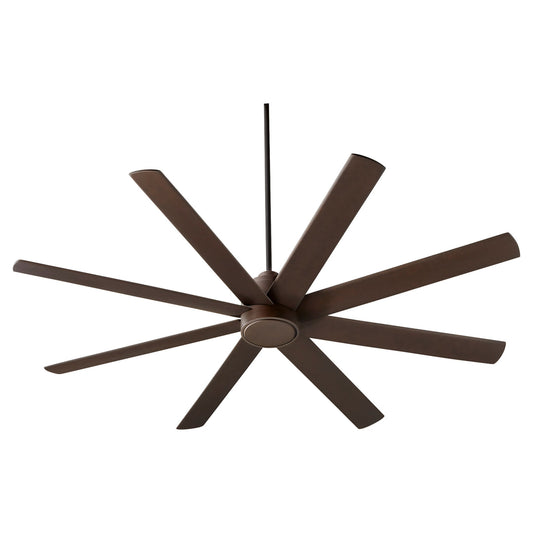
Let's be honest, some rooms don't just need a fan—they need a centerpiece. For those large great rooms, spaces with vaulted ceilings, or any spot where you want to make a bold impression, our 6+ Blade Collection is the answer. These fans are engineered for maximum airflow and serious visual impact.
Take the powerful Andros fan, an impressive fixture priced over $900. With its huge blade span and workhorse motor, it’s built to handle large, open-concept spaces without breaking a sweat. The Andros isn't just a utility; it's a dynamic showstopper that combines industrial-grade power with stunning design, all fully controllable from your phone.
From minimalist cool to grand and dramatic, the perfect smart fan is out there. Your journey from design daydream to a cooler, smarter home is just getting started.
Frequently Asked Questions
Alright, we've covered styles, motors, and what makes a fan "smart." But I know there are probably a few last-minute questions still bouncing around in your head. Let's get those answered so you can feel completely confident about picking the perfect fan for your home.
Can I Make My Current Ceiling Fan Smart?
You absolutely can! If you're attached to your current fan but want to bring it into the 21st century, a universal smart fan controller is your new best friend. These little gadgets get wired in between your fan and its power source, giving your old fan a "brain" transplant. Suddenly, it can connect to Wi-Fi, respond to an app, and listen to your voice commands.
While this is a fantastic, budget-friendly route, there's a reason dedicated smart fans exist. A purpose-built model, like the sleek Alto (which starts above $300), has all the technology integrated right from the factory. That means you get a perfectly seamless experience right out of the box, with no guesswork.
How Much Energy Do Smart Fans Really Save?
The savings are pretty significant, and it comes down to two things: the motor and the smarts. Most modern smart fans run on hyper-efficient DC motors, which can use up to 70% less energy than the clunky old AC motors you might be used to.
But the real game-changer is automation. When you can schedule your fan to run only when you're home, or use sensors to have it adjust its own speed, you're cutting out all that wasted runtime. This smart teamwork helps your air conditioner take a break, which you'll definitely see reflected in your monthly energy bills.
A smart fan isn't just a product; it's a strategy. It proactively manages your home's climate to reduce energy consumption without you ever sacrificing comfort.
Do Smart Fans Work Without Wi-Fi?
Yes, they sure do. If your internet decides to take an unexpected vacation, your fan won't just give up. While you need Wi-Fi for the "smart" stuff—like telling Alexa to turn it on or controlling it from your phone when you're not home—it won't become a useless fixture.
Just about every smart fan still ships with a good old-fashioned physical remote. You can always use that to handle the basics like turning it on and off, changing speeds, or operating the light. You get the best of both worlds: advanced control when you're connected and reliable manual operation when you're not.
Is It Hard to Set Up a Smart Fan with Alexa or Google?
Not at all! This isn't 2016 anymore. Fan manufacturers have made the setup process incredibly simple. It usually just takes a few quick taps inside the fan's smartphone app.
You'll connect the fan to your Wi-Fi, then head into the app's settings to link it with your Amazon Alexa or Google Home account. Once you grant permission, the fan just shows up as a new device, ready for you to boss it around with your voice.
Our goal is to make it easy to find a fan that fits your home, your style, and your smart ecosystem. Take a look through our curated collections and see how simple it is to add a touch of intelligent design to your space.
Start your journey to a smarter, more comfortable home today!


